

From the Wrath of Man to the Grace of God
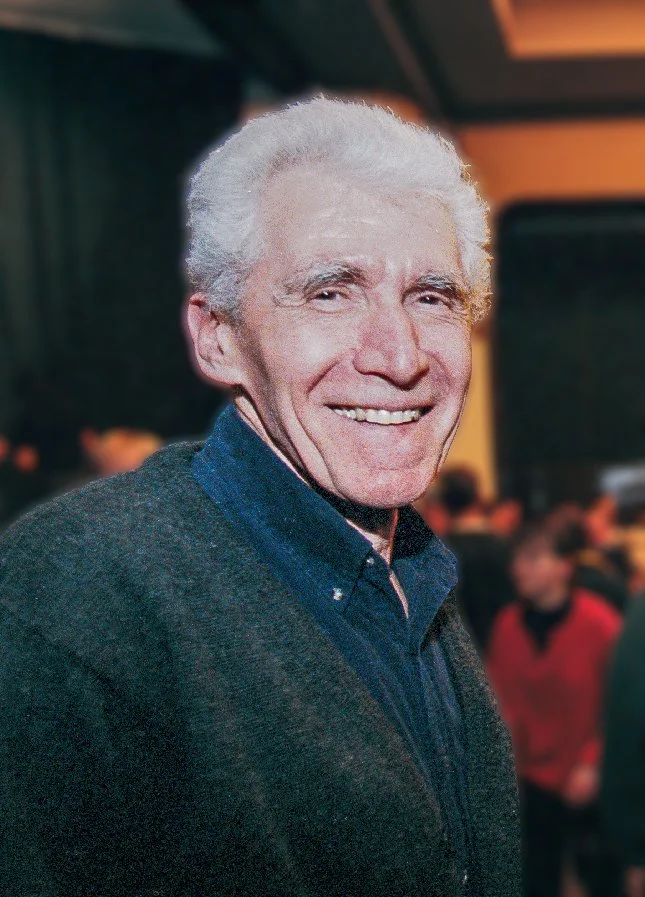
From being a child in Nazi-occupied Hungary, a teenager resisting Soviet Communism, and an adult in America, God allowed István Erényi to further the Gospel in the country of his birth. Photo by Tom Price
This personal testimony first appeared in Calvary Chapel Magazine Issue 13, Fall 2002
April 1943—Soldiers of the Third Reich patrolled the perimeter of the airport. Four Hungarian lads crawled through the grass toward the Luftwaffe fighter planes sitting beside the runway. As a guard passed nearby, the youngest of the four raised his head for a better look. His older brother quickly slammed his face into the ground.
“Stay down, István!” his brother scolded in a hushed whisper. “You will get us all killed.” István didn’t mind the tongue-lashing as his heart pounded with excitement. He loved that his older brothers allowed him along on this adventure and was thrilled that they were playing a deadly game.
He had witnessed the cruelty of the German soldiers as they pushed the people who had that big star sewn onto their coats through the streets. The star was bright yellow and seemed to dwarf the sad faces that wore it. István’s mother had told him the people were Jews. They were “enemies” of the Germans and were being sent away to another land. István didn’t want to get caught by the Nazi guards and be made to wear one of those yellow stars and become a Jew.
The foursome continued crawling toward the aircraft, careful of the passing guards. Reaching the belly of a Nazi bomber, István was lifted up into the warplane. The brothers quickly forgot the danger of their venture when they entered the magnificent cockpit. They began to manipulate the gears and eventually turned the engine over. The guards raced toward the plane, and they dragged the four boys to the commandant. Threatening at first to send them off to a prison camp, the commandant thought it through and decided against it. These Hungarian lads were loosely part of the Third Reich, and their ill-directed bravery might be useful in later years as the German army conquered the rest of the world.
Moments later a siren wailed, and panic overcame their captors. From the window, the boys watched the airplane that they had just been pulled out of erupt into flames. Allied bombers, probably American, were destroying the airstrip, catching the Germans off guard. Enemy aircraft had never penetrated this far into the European continent. Explosions and anti-aircraft fire riveted the area. In all the confusion, the boys slipped away. Then a fighter plane strafed them as they ran across a recently plowed field.
“A year later, he witnessed Russian troops, as they swept through Hungary, wild with victory against the Nazis.”
István watched in amazement as machine gun fire sprayed up dirt around them just a few feet away on each side.
A year later, he witnessed Russian troops as they swept through Hungary, wild with victory against the Nazis. They were as mean as the Germans, maybe worse, István thought.
October 1956—The revolution had swept their Communist oppressors from power. Throughout the streets of Hungary, people were delirious with unrestrained joy. Twelve years of a cruel, godless dictatorship and ruthless persecution from the state-sponsored secret police had left Hungary in shambles. But now young Hungarians had risen up in defiance.
Surely the United States, that beacon of freedom that helped save Europe from Nazi domination, would intervene if the Soviets tried to quell the Hungarian uprising, thought István, now a young man. He later learned that America felt the cost of a possible nuclear war was too high a price to pay to free one of Russia’s satellite countries.
Ten days after the revolution, Soviet tanks rumbled into all the major cities and opened fire, destroying anything that moved. They restored Communist rule and quelled the uprising. István carried his brother, wounded in the fighting, to safety.
“This is it,” István told his brothers. “The revolution is lost. America is not coming to save us. A firing squad will gun you down because they will know you took part in overthrowing the Communists. We must leave Hungary or die.”
With their dreams dashed of a free Hungary, the brothers plotted their route. Backpacks or carried food would give their escape away. Suspected saboteurs of the government were being shot on sight. Neighbors betrayed those who took part in the government overthrow.
In the darkness of the night, the brothers crept out of town. István helped carry his older brother, still wounded and unable to walk on his own. Sleeping in haystacks and abandoned farmhouses, the young men huddled together to keep from freezing to death in the late November frost. They traveled at night through the forests to make their escape. Uncertain if they were in Austria or Yugoslavia, they feared deportation. They finally reached Austria and later freedom in Italy.
Finding safety and medical treatment, one of the brothers courageously retraced their steps back to Hungary and assured the family they could get to Austria. A year later, visas to enter the United States were cleared. István took the first name of Steve. The only English word he knew was “thanks.”
March 1991—Steve Erényi sat in his car after moving out of his home. He really had nowhere to go. His wife wanted a divorce, and he knew from the devastation of his first marriage that would mean losing much of his contact with his children as well. How could this have happened?
He had believed in the American dream, had worked hard to be successful—serving in the U.S. Armed Forces even before becoming a citizen—and had become an executive in the real estate development business in several western states, including California. But for all his success, the collapse of his second marriage and the devastation he could see in all four of his children made his American dream a lie.
He flicked on the car radio. Scanning for stations, it landed on a calming voice. A minister was sharing about the amazing grace of God. Steve had never been interested in the folly of organized religion, so he started to change the dial, but he was somehow captivated by what the man spoke.
“God loves all of us so much,” the preacher said. “He allowed His only Son to bear the sins of the entire world and hang on a cross so that we could have the assurance of spending eternity with God.” For the first time in his life, Steve pondered this thought. Later the man spoke of sharing the Gospel in countries that were throwing off the shackles of decades of communism. First, he spoke of Yugoslavia. Then, Steve felt a shiver run through him as the man mentioned missionary work going on in Steve’s homeland of Hungary.
Steve listened carefully at the end of the broadcast to put an address to the church and a name to the voice. The program said to listen at this time tomorrow to hear the pastor of Calvary Chapel Vista, CA. Two nights later, Steve attended the church and gave his life to the Lord.
July 2000—István reclaimed his first name when he returned to Hungary as a missionary from CC Vista. Spending half of the year in California gave him time with his adult children. The rest of the time, he assisted Pastor Greg Opean at the vibrant, fast-growing CC Budapest. While Greg had a command of the Hungarian language, István had the unique ability to negotiate between American thinking and Hungarian customs. His abilities were vital in settling on an historic theater to house the expanding church. It was located in the middle of one of the busiest shopping areas in the capital city.
“István ‘Steve’ Erényi and Pastor Greg Open, had the foresight ... to see the incredible potential this facility had.”
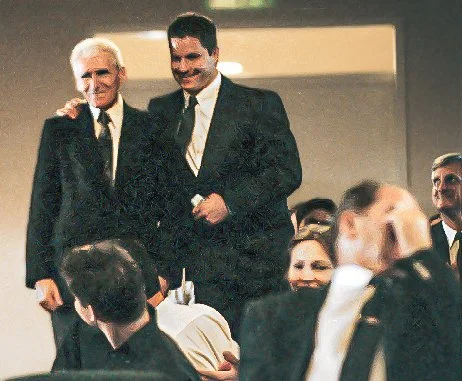
István Erényi (left) and Pastor Greg Opean, CC Budapest, are recognized at the dedication of the new Bible College in Hungary. They were instrumental in purchasing the Zichy Castle. Photo by Tom Price
Calvary Chapel Costa Mesa, CA, had also been searching for property to place a Bible College in Eastern Europe. The Castle in Austria had served its purpose well for God’s glory, but now a facility was needed in the heart of the mission field that didn’t restrict the movement of the students.
Filled with the Holy Spirit, the two men, István and Greg, like Joshua and Caleb so long ago, set out to search the land for suitable property. They came upon the Zichy-Kastely in Vajta, two hours south of Budapest. The property was in the process of being sold, both men felt God leading them to inquire anyway. Since the Zichy-Kastely was an historical site, strict guidelines would have to guide its restoration, and the historical board was suspicious of the motives of the current European investors.
István was able to satisfy the Hungarians that the Americans represented an honorable group of people who would be a blessing to not only the property, but also to the Vajta village and the surrounding counties.
“The Zichy-Kastely was absolutely perfect for the Bible College,” said István. “Though it needed extensive renovation, it would be an ideal setting for the school—with elaborate Hungarian decor, Ionic columns, and extensive room for growth on 48 acres of property.” István took photographs on a loaned digital camera and sent images via the Internet to Pastor Chuck Smith. Greg and István prayed. Several days later, they received a message saying to proceed with the negotiations and buy the property.
August 28, 2002—Workers and volunteers labored until visitors began arriving for the dedication ceremony. The last bit of sod was laid around a fountain that had just been painted and filled with water an hour earlier. The staff swept, polished, and cleaned in a feverish pitch.
“While the project took longer than expected,” commented Pastor Chuck Smith, “the Zichy property, which has been beautifully restored, will now be in the business of restoring lives of young people from around the world to the living Lord.” The sanctuary had been transformed from a dark, dreary attic into a three level worship center, highlighted by the wooden beams that formed the top of the actual structure. Natural light filtered down from the framed arched windows, high above the carpeted floor.
At the end of the dedication, the master of ceremonies asked István and Greg to stand. “These two men, István ‘Steve’ Erényi and Pastor Greg Opean, had the foresight and the ability to see the incredible potential this facility had for the future. Without their vision, this project would never have begun.” The two men stood, their arms around each other, seeing their dreams fulfilled. The new sanctuary, filled with Hungarians and Americans, erupted into spontaneous applause.
Thank you for reading! If this story inspired you, we invite you to partner with us in continuing the ministry God started over 27 years ago. We appreciate your prayerful consideration in joining us to reach more souls for Jesus.

SPONSOR MESSAGE: Owner, founder, and managing attorney John McCravy is an elder at Calvary Chapel Greenwood, SC, and serves as an officer with the National Association of Christian Lawmakers. McCravy Law is a Christian-based firm committed not only to helping clients legally but also ministering to them. Visit our website
© 2026 Calvary Chapel Magazine (CCM). All rights reserved. Articles or photographs may not be reproduced without the written permission of CCM. All Scripture quotations, unless otherwise indicated, are taken from the New King James Version. Copyright © 1982 by Thomas Nelson, Inc.® Used by permission.